Treasure NFT Domain Age: What WHOIS Can and Cannot Prove
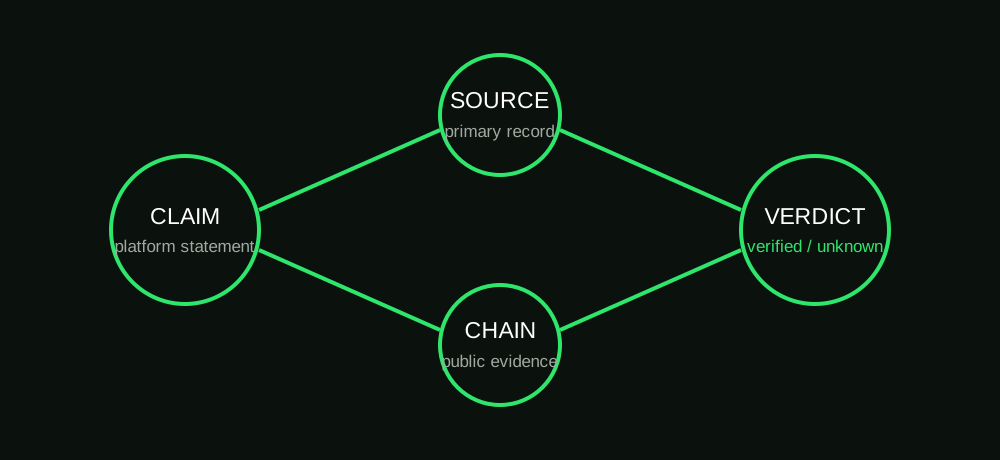
SERP research note: Search results often convert a WHOIS creation date into a launch year. This page keeps domain creation, first public marketing and actual product availability as separate timeline events.
The practical answer for this search
Domain age can help build a timeline, but it cannot prove a Treasure NFT launch date, company history, ownership continuity or financial legitimacy. The key is to preserve exact identifiers and test them outside the platform or message thread. Repetition across blogs, groups or screenshots does not turn a claim into independent evidence.
How to verify Treasure NFT Domain Age
A usable company check connects the brand, legal entity, directors, operating address, payment recipient and governing jurisdiction. One isolated certificate is not enough when the entity taking money is different from the entity named on a website.
| Step | Page-specific check | Evidence standard |
|---|---|---|
| 1 | Record creation and update dates | Record the source, date and result. Mark unresolved facts instead of filling gaps. |
| 2 | Compare archived versions of the site | Record the source, date and result. Mark unresolved facts instead of filling gaps. |
| 3 | Separate registrar privacy from operator identity | Record the source, date and result. Mark unresolved facts instead of filling gaps. |
How to interpret the result
Classify each result as verified, contradicted or unresolved. “Verified” requires a source that can be reopened by another reader; “contradicted” requires a record that directly conflicts with the claim; “unresolved” is the correct label when evidence is missing. Do not turn absence of evidence into a specific accusation.
Registration normally confirms that an entity was recorded; it does not certify an investment product, guarantee returns or prove custody of user assets.
What to do next in your jurisdiction
If the check reveals credential theft, an unexplained payment demand or suspected financial fraud, stop further payments and preserve the evidence. Contact the bank, wallet provider or exchange used for the transfer, then use the official cybercrime or financial-fraud channel in your jurisdiction. Do not publish seed phrases, OTPs or full identity documents.
Frequently asked questions
What is the first check for Treasure NFT Domain Age?
Start with what the domain record actually establishes. Record the exact identifier and verify it through an independent source before acting.
What does a failed Treasure NFT Domain Age check prove?
It proves only that the specific claim was not verified or was contradicted. Preserve the result and avoid broader conclusions that the evidence does not support.
When should Treasure NFT Domain Age be reported?
Report promptly when the facts indicate suspected fraud, unauthorized access or a payment induced by deception. Use the official reporting channel for your jurisdiction and retain the case reference.
For Treasure NFT Domain Age, does company registration mean an NFT investment is approved?
For this Treasure NFT Domain Age check, no. Incorporation and authorization to offer a financial product are separate questions.